India has no national school screening programme for scoliosis. For most families that means nobody is checking, and a curve is often noticed only once it is visible through clothing. This guide explains how to do the check yourself, what the number means, and when it warrants a doctor.
Why this check falls to parents in India
In countries with national school screening, a nurse or doctor performs this test on every child in a given school year. Singapore has done it since 1982. India has no equivalent programme, and published prevalence data for Indian school populations remains limited.
The practical consequence is delay. Adolescent idiopathic scoliosis is painless in its early stages and develops during the growth spurt, which is exactly when children stop changing clothes in front of their parents. Without a routine check, the first sign is often a shoulder or waist asymmetry that a relative notices — by which point the curve has usually been progressing for some time.
None of that is a reason for alarm. It is a reason to spend two minutes on a check that costs nothing.
What screening studies in India have found
The evidence base is small but growing, and two studies are worth knowing about because they say slightly different things.
A cross-sectional school screening study in South Bengaluru examined 1,076 adolescents aged 11 to 14 across six schools — three private, three government. Trained evaluators used visual postural assessment, the Adam’s Forward Bend Test and a scoliometer, treating an ATR of 7° or more as screen-positive and 5° to 6° as at-risk. They found 1.6% screen-positive and a further 6.7% at-risk. Screen-positive findings were more common in girls (2.01%) than boys (1.04%), and notably more common in private schools (1.98%) than government schools (0.37%).
A larger study in Jammu and Kashmir screened 9,500 individuals and found an overall AIS prevalence of 0.61% — but with an unusual pattern. Prevalence was lower in girls (0.31%) than boys (0.88%), which runs contrary to the global picture of female predominance. The authors treat this as a finding requiring further investigation rather than a settled fact.
How to perform the test at home
This is the same technique used in the school screening studies above. It is simple to perform and easy to do badly, so the detail matters.
- Position. Have your child stand with feet together and knees straight, with the back uncovered or in a swimsuit top. Good light and a clear view of the whole back matter more than anything else here.
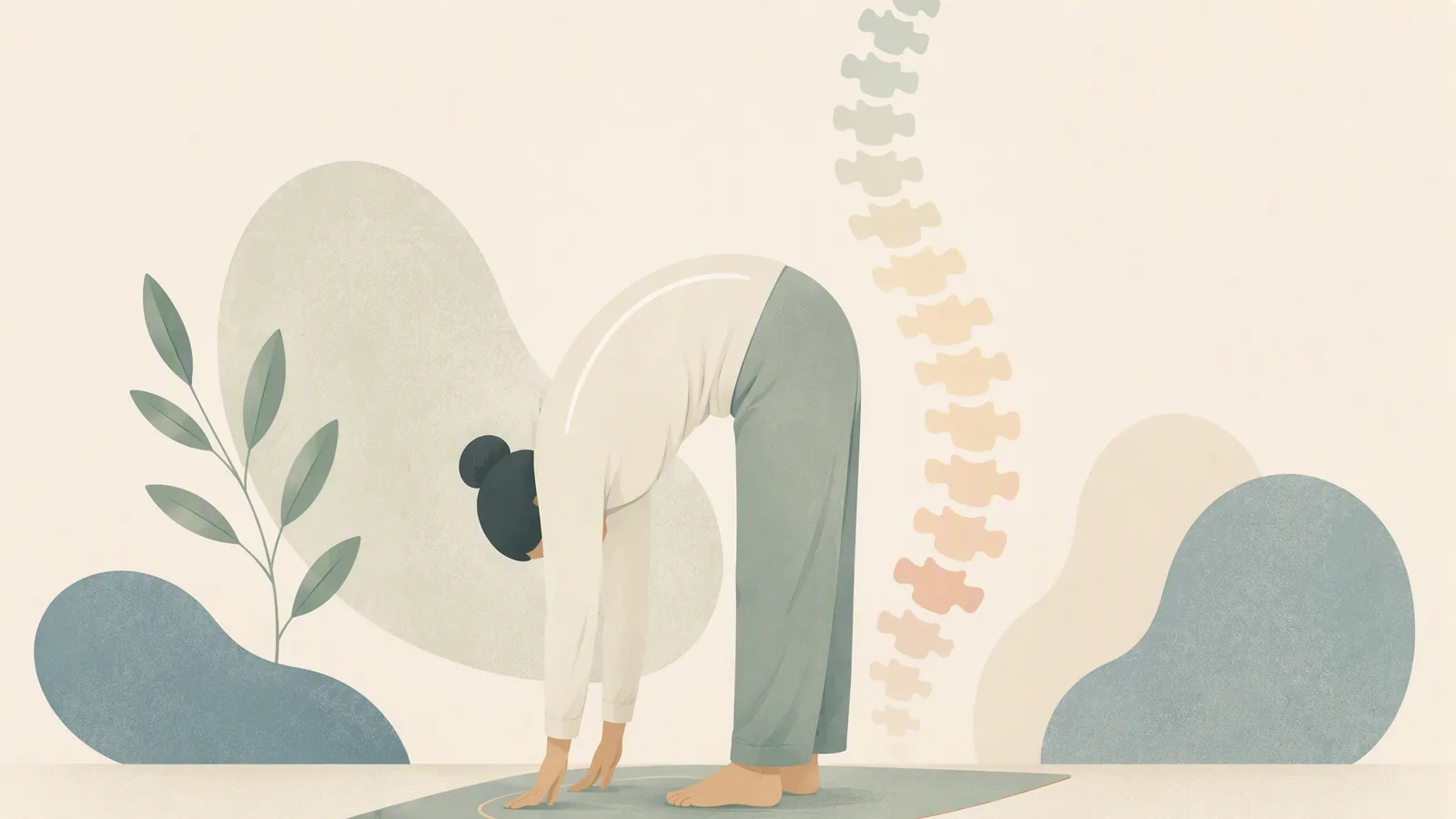
- Bend. Ask them to bend forward from the waist, arms hanging loose and palms together, until the upper back is roughly horizontal.
- Look before you measure. View from directly behind, with your eyes level with the back. You are looking for one side sitting higher than the other — a rib hump in the upper back, or a fullness on one side of the lower back.
- Measure. Rest the scoliometer, or a phone running a scoliometer app, gently across the back at the highest point of asymmetry. Let it sit under its own weight; do not press.
- Work down the spine. Move from the upper back to the lower back and record the largest reading you find, together with where on the back you found it.
- Keep conditions identical. Same person measuring, same time of day, same technique. A series of readings is only useful if the readings are comparable.
What the reading means
| Reading | What it suggests | What to do |
|---|---|---|
| Under 5° | Within the range seen in children without scoliosis | Re-check every few months through the growth spurt |
| 5° – 6° | At-risk band — 6.7% of the Bengaluru cohort sat here | Re-measure carefully; watch for any rise |
| 7° or more | Screen-positive — 1.6% of the Bengaluru cohort | Arrange a professional assessment |
What the test cannot tell you
- It measures rotation, not curvature. A child can have a measurable curve on X-ray with relatively little surface rotation, and the reverse is also true.
- It does not produce a Cobb angle, and no app or scoliometer can convert one into the other reliably.
- It does not distinguish idiopathic scoliosis from other causes of trunk asymmetry, including leg length difference or postural habit.
- Readings vary between the people taking them. This is why the same person should take every measurement in a home series.
- A normal reading is reassuring at that moment. It says nothing about the next twelve months, which is why the check is repeated through growth.
When to see a doctor
Arrange an assessment if any of the following applies:
- A reading reaches 7° or more.
- Readings are climbing across measurements, particularly a rise of around 5°.
- You can see uneven shoulders, one shoulder blade standing out, an uneven waistline, or a visible rib hump on forward bending.
- Your child is in or approaching the growth spurt and a close relative has scoliosis.
- There is back pain that wakes your child at night, or any numbness or weakness — these are not typical of adolescent idiopathic scoliosis and need prompt review.
Start with your paediatrician or family doctor, who can arrange an X-ray and refer on to an orthopaedic or spine specialist if the Cobb angle warrants it. Because there is no screening programme routing children into the system, you may need to ask for the assessment directly rather than wait to be offered one.
Take your readings with you — dates, degrees and where on the back you measured. A record showing whether anything has changed over six months is more useful to a clinician than a single number on the day.
Measure trunk rotation on your phone
Available on iPhone and Android.

 Trusted by clinicians and families in 75+ countries.
Frequently asked questions
- Is scoliosis screened for in Indian schools?
- There is no national school screening programme. Some schools and hospitals run local screening camps, and researchers have conducted school-based studies in cities including Bengaluru, but there is no routine nationwide check. In practice, detection usually depends on a parent or clinician noticing something.
- How common is scoliosis in Indian children?
- There is no reliable national figure. A Bengaluru school study found 1.6% of 11 to 14 year olds screen-positive at 7° or above, with a further 6.7% in the 5° to 6° at-risk band. A Jammu and Kashmir study of 9,500 people found overall AIS prevalence of 0.61%. Both are regional and used different methods.
- Is it true that scoliosis is more common in girls?
- Globally, yes, and the Bengaluru study found the same pattern (2.01% in girls against 1.04% in boys). The Jammu and Kashmir study found the reverse. Screen your son as readily as your daughter — the technique is identical and the cost of checking is nothing.
- Why were private school students found to have higher rates?
- The Bengaluru study reported 1.98% in private schools against 0.37% in government schools. The authors do not establish a cause, and a difference of that size across a single city warrants caution before drawing conclusions about lifestyle, nutrition or measurement conditions.
- Does the app measure the Cobb angle?
- No. It measures the Angle of Trunk Rotation on the surface of the back. The Cobb angle is measured on an X-ray by a clinician and is the diagnostic measurement for scoliosis. No app can convert one into the other.
- Should I get an X-ray straight away if the reading is high?
- That is a decision for a doctor, not for you or for an app. Take your readings to a paediatrician or family doctor and let them decide whether imaging is warranted. Repeated X-rays carry a radiation cost that a clinician will weigh against the value of the information.
- How often should I re-check?
- Every three to six months through the growth spurt is reasonable for a child with no findings. If you are watching a reading in the 5° to 6° band, measure more often and write every reading down.
Sources. Prevalence and threshold figures from Kudva M, Nadgir A, Pruthviraj R. School-Based Screening for Adolescent Idiopathic Scoliosis in South Bengaluru, India: A Cross-Sectional Study for Early Detection and Intervention. Stud Health Technol Inform. 2026;337:131–135, retrieved via PubMed (DOI 10.3233/SHTI260758). Regional comparison from Singh H, et al. The first study of epidemiology of adolescent idiopathic scoliosis shows lower prevalence in females of Jammu and Kashmir, India. Am J Transl Res. 2022;14(2):1100–1106, via PubMed (PMID 35273713). Both are regional studies and neither establishes a national prevalence figure. Cited research assessed screening methods, not any specific application. Results vary between individuals.

