The NHS does not screen schoolchildren for scoliosis, and that is a deliberate decision rather than an oversight. This guide explains the reasoning, what it means in practice for parents, and how to perform the forward bend test at home if you want to keep an eye on things yourself.
Why the UK decided not to screen
The UK National Screening Committee has recommended against a national screening programme for adolescent idiopathic scoliosis. The position was set in 2012 and an external review in 2015 concluded it should be retained.
It is worth understanding the reasoning, because it is not about cost and it is not dismissive of scoliosis.
- The test flags far more children than need treatment. The review found the forward bend test with a scoliometer had a positive predictive value of around 8% for identifying children who would ultimately require treatment. Roughly nine in ten children referred by a screening programme would not go on to need intervention.
- Each of those referrals has a cost. Not financial — X-ray exposure in a growing child, follow-up appointments, and the anxiety of being told your child may have a spinal condition when most will not.
- The treatment evidence was not settled. The review found no clear evidence that treating curves picked up by screening produces better outcomes than treating curves picked up clinically, and no agreed evidence-based treatment guidelines to screen into.
That is a defensible position, and reasonable clinicians hold it. It is also a population-level judgement about a whole programme, not advice to any individual parent about their own child.
What it means for you
The practical consequence is that in the UK, scoliosis is usually noticed by a parent, occasionally by a school nurse or GP during an unrelated appointment, and sometimes not until a curve is visible through clothing.
If you want your child checked during the growth spurt, that check falls to you. The technique below is the same one a screening programme would use. Nothing about the NSC decision suggests parents should not look — only that a mandatory national programme was not judged to do more good than harm.
How to perform the test at home
- Position. Have your child stand with feet together and knees straight, back uncovered or in a swimsuit top.
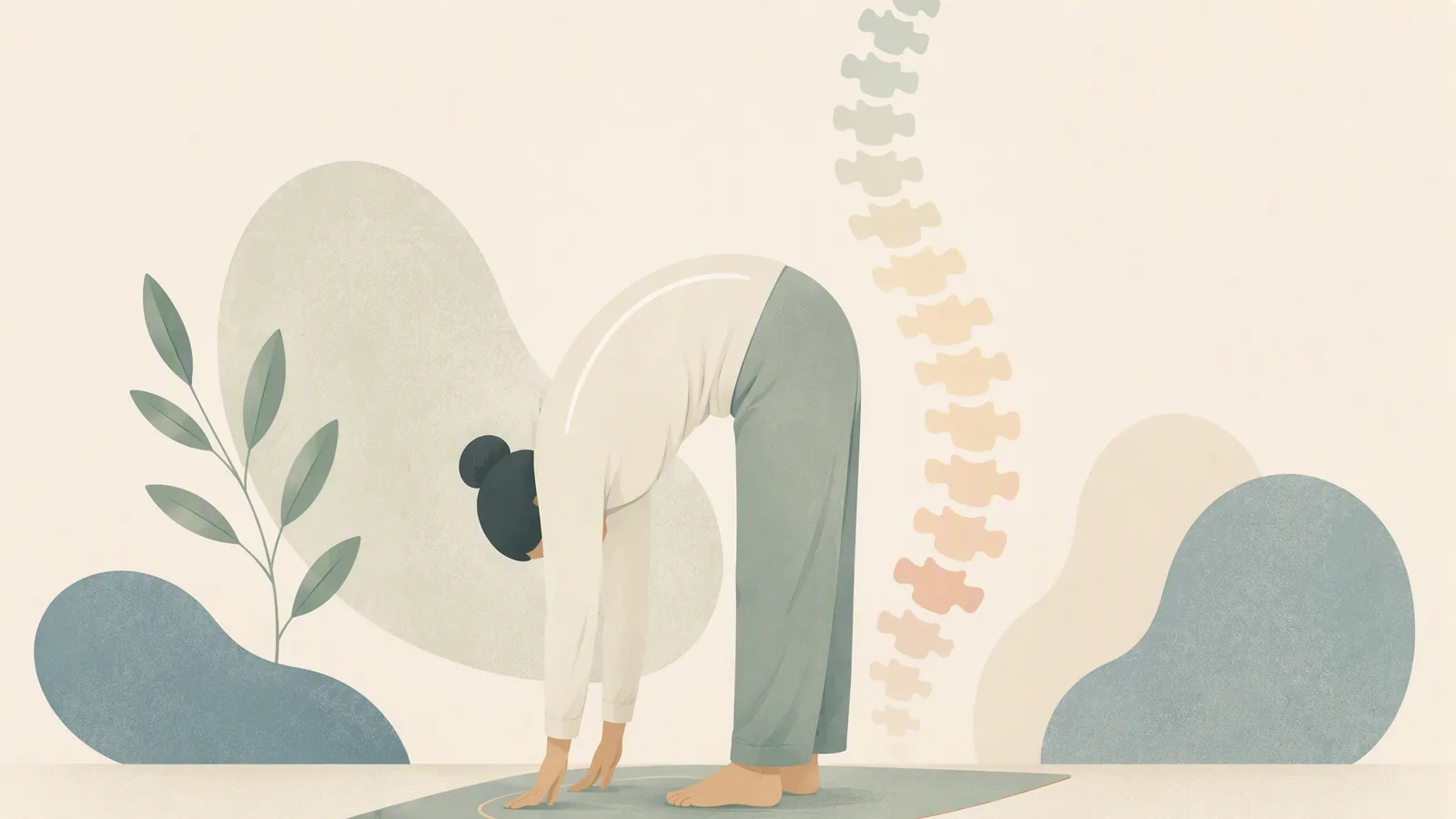
- Bend. Ask them to bend forward from the waist, arms hanging loose and palms together, until the upper back is roughly horizontal.
- Look before you measure. View from directly behind with your eyes level with the back. You are looking for one side sitting higher than the other — a rib hump in the upper back, or a fullness on one side of the lower back.
- Measure. Rest the scoliometer, or a phone running a scoliometer app, gently across the back at the highest point of asymmetry. Let it sit under its own weight; do not press.
- Work down the spine. Move from upper to lower back and record the largest reading, with a note of where you found it.
- Keep conditions identical. Same person measuring, same time of day, same technique. A series is only useful if the readings are comparable.
What the reading means
| Reading | What it suggests | What to do |
|---|---|---|
| Under 5° | Within the range seen in children without scoliosis | Re-check every few months through the growth spurt |
| 5° – 6° | Worth attention | Re-measure carefully; watch for any rise |
| 7° or more | The usual threshold for professional assessment | Book a GP appointment |
These thresholds are the ones used in screening research generally. Because the UK has no national programme, there is no NHS-set home threshold to follow — use these as a prompt to seek advice, not as a verdict.
What the test cannot tell you
- It measures rotation, not curvature. A child can have a measurable curve on X-ray with relatively little surface rotation, and the reverse is also true.
- It does not produce a Cobb angle, and no app or scoliometer can convert one into the other reliably.
- It does not distinguish idiopathic scoliosis from other causes of trunk asymmetry, including leg length difference or postural habit.
- Readings vary between the people taking them, which is why one person should take every measurement in a home series.
- A normal reading is reassuring at that moment and says nothing about the next twelve months.
Seeing your GP
Book an appointment if any of the following applies:
- A reading reaches 7° or more.
- Readings are climbing across measurements, particularly a rise of around 5°.
- You can see uneven shoulders, one shoulder blade standing out, an uneven waistline, or a visible rib hump on forward bending.
- Your child is in or approaching the growth spurt and a close relative has scoliosis.
- There is back pain that wakes your child at night, or any numbness or weakness — these are not typical of adolescent idiopathic scoliosis and need prompt review.
Your GP is the route to a paediatric spine service; specialist referral in the NHS generally starts there. Because there is no screening programme feeding children into the system, be prepared to explain what you have observed rather than assuming it will be asked about.
Take your readings with you — dates, degrees and where on the back you measured. A record showing whether anything has changed over six months is considerably more useful in a ten-minute appointment than a single number on the day. It also helps a GP distinguish a stable finding from a progressing one, which is the distinction the NSC review was most concerned about.
Measure trunk rotation on your phone
Available on iPhone and Android.

 Trusted by clinicians and families in 75+ countries.
Frequently asked questions
- Does the NHS screen children for scoliosis?
- No. The UK National Screening Committee recommended against a national programme in 2012, and a 2015 external review concluded the recommendation should be retained. There is no routine school check.
- Why not, if early detection helps?
- The review found the screening test had a positive predictive value of about 8% for children who would ultimately need treatment, meaning most referrals would be unnecessary. It also found no clear evidence that treating screen-detected curves beats treating clinically-detected ones, and no agreed evidence-based treatment guidelines. The judgement was that a national programme would not do more good than harm.
- Does that mean I should not bother checking?
- No. The decision is about running a mandatory national programme, not about whether an individual parent should look. Checking your own child costs nothing and carries none of the population-level downsides the review was weighing.
- What do I say to my GP?
- Describe what you have observed and show your readings — dates, degrees, and where on the back you measured. A trend over months is far more informative than a single figure, and it helps distinguish a stable finding from a progressing one.
- Will my GP order an X-ray?
- That is their clinical judgement. An X-ray is the only way to establish a Cobb angle, but it carries a radiation cost in a growing child, so it is not ordered on every raised reading.
- Does the app measure the Cobb angle?
- No. It measures the Angle of Trunk Rotation on the surface of the back. The Cobb angle is measured on an X-ray by a clinician and is the diagnostic measurement for scoliosis. No app can convert one into the other.
- How often should I re-check?
- Every three to six months through the growth spurt is reasonable for a child with no findings. If you are watching a reading in the 5° to 6° band, measure more often and write every reading down.
Sources. The screening position, the 2012 recommendation, the 2015 external review and the 8% positive predictive value are from the UK National Screening Committee, Screening for Adolescent Idiopathic Scoliosis (UK NSC legacy screening policy database). NHS referral pathways vary by area and change over time; confirm current arrangements with your GP practice or local NHS trust. Cited research assessed screening methods, not any specific application. Results vary between individuals.

