New Zealand has no school scoliosis screening programme, and one national spine service at the end of the pathway. That combination means two things for parents: nobody is checking your child unless you do, and if something is found, the route to a specialist runs through your GP.
Nobody screens for this at school here
There is no national school screening programme for scoliosis in New Zealand. KidsHealth, the country’s trusted source of children’s health information, describes detection as a parent noticing something — uneven shoulders, one shoulder blade standing out — and then taking the child to a health professional.
That is the whole detection mechanism. It works when a parent knows what to look for and looks during the right window, and it fails quietly when they do not, because adolescent idiopathic scoliosis is painless while it is establishing itself.
The right window is the growth spurt, roughly ages 10 to 14 and earlier in girls than boys. It is also the age at which children stop changing in front of their parents, which is exactly why other countries built school programmes.
Where a referral actually goes
Scoliosis in New Zealand children is handled by the Starship Spine Service, which operates as a national referral centre based at Starship Children’s Hospital in Auckland, with outreach clinics at Waikato Hospital. Scoliosis is the most common condition it sees.
Two things about that pathway are worth knowing before you start it.
- Your GP is the gate. A child must be assessed by a GP or a specialist before they can be referred to the Spine Service. You cannot self-refer.
- Outside Auckland, there is an extra step. Referrals from elsewhere in the country must come via your local hospital rather than going directly to Starship.
Referrals may also be returned to the GP for management rather than resulting in an appointment, and there are waiting times. None of that is unusual for a single national service, but it does change what a parent should bring to the first appointment.
How to perform the test at home
- Position. Have your child stand with feet together and knees straight, back uncovered or in a swimsuit top. Good light and a clear view of the whole back matter more than anything else.
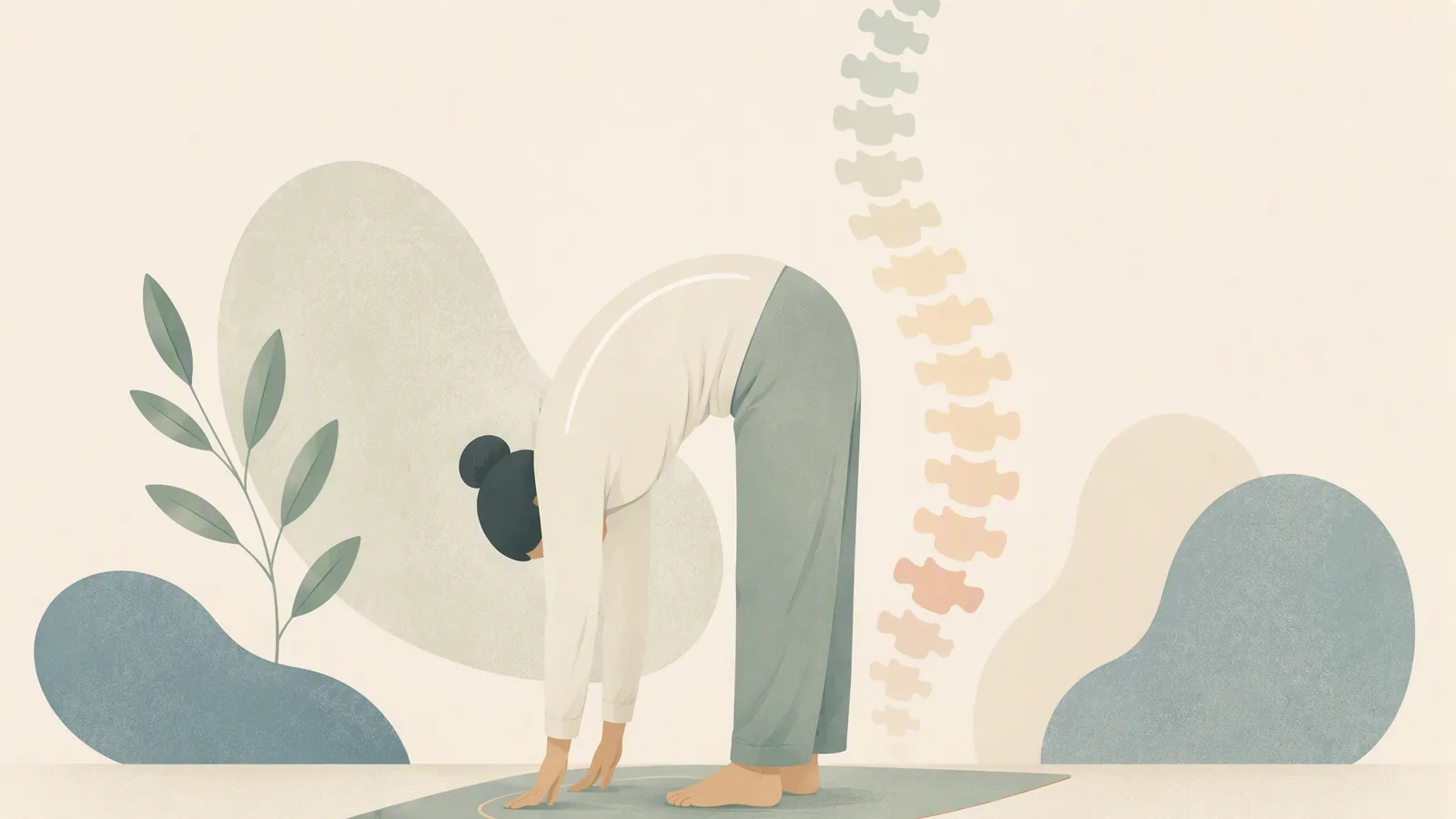
- Bend. Ask them to bend forward from the waist, arms hanging loose and palms together, until the upper back is roughly horizontal.
- Look before you measure. View from directly behind with your eyes level with the back, so you are sighting along it rather than down at it. You are looking for one side sitting higher than the other — a rib hump in the upper back, or a fullness on one side of the lower back.
- Measure. Rest the scoliometer, or a phone running a scoliometer app, gently across the back at the highest point of asymmetry. Let it sit under its own weight; do not press.
- Work down the spine. Move from upper to lower back and record the largest reading, with a note of where you found it.
- Keep conditions identical. Same person measuring, same time of day, same technique. A series is only useful if the readings are comparable.
What the reading means
| Reading | What it suggests | What to do |
|---|---|---|
| Under 5° | Within the range seen in children without scoliosis | Re-check every few months through the growth spurt |
| 5° – 6° | Worth attention | Re-measure carefully; watch for any rise |
| 7° or more | The usual threshold for professional assessment | Book a GP appointment |
These are the thresholds used in screening research generally. Because New Zealand runs no screening programme, there is no national home threshold to follow — treat these as a prompt to seek advice, not as a verdict.
What the test cannot tell you
- It measures rotation, not curvature. A child can have a measurable curve on X-ray with relatively little surface rotation, and the reverse is also true.
- It does not produce a Cobb angle, and no app or scoliometer can convert one into the other reliably.
- It does not distinguish idiopathic scoliosis from other causes of trunk asymmetry, including leg length difference or postural habit.
- Readings vary between the people taking them, which is why one person should take every measurement in a home series.
- A normal reading is reassuring at that moment and says nothing about the next twelve months.
Seeing your GP
Book an appointment if any of the following applies:
- A reading reaches 7° or more.
- Readings are climbing across measurements, particularly a rise of around 5°.
- You can see uneven shoulders, one shoulder blade standing out, an uneven waistline, or a visible rib hump on forward bending.
- Your child is in or approaching the growth spurt and a close relative has scoliosis.
- There is back pain that wakes your child at night, or any numbness or weakness — these are not typical of adolescent idiopathic scoliosis and need prompt review.
Bring your readings: dates, degrees, and where on the back you measured. Because nothing in the New Zealand system has been watching your child’s spine, your record is the only history of the curve that exists, and it is the thing most likely to distinguish a stable finding from a progressing one at the point a referral decision is made.
If you are outside Auckland, expect the referral to route through your local hospital rather than straight to Starship. Ask your GP what that means for timing in your region.
Measure trunk rotation on your phone
Available on iPhone and Android.

 Trusted by clinicians and families in 75+ countries.
Frequently asked questions
- Do New Zealand schools check for scoliosis?
- No. There is no national school screening programme. Detection relies on a parent or clinician noticing something, which is why knowing what to look for during the growth spurt matters here more than in countries that screen.
- Can I go straight to a specialist?
- No. A child must be assessed by a GP or a specialist before being referred to the Spine Service. If you live outside Auckland, the referral also has to come through your local hospital rather than going directly to Starship.
- Where does scoliosis get treated in New Zealand?
- The Starship Spine Service is the national referral centre, based at Starship Children’s Hospital in Auckland with outreach clinics at Waikato Hospital. Scoliosis is the most common condition it sees.
- What if the referral gets sent back to my GP?
- That happens, and it is not a dismissal. It usually means the finding does not meet the threshold for specialist assessment yet. Keep measuring, keep the record dated, and go back if the readings rise.
- How long will we wait?
- There are waiting times, and they vary. This is the practical reason to raise a concern early rather than watching for another six months, and to bring a documented trend rather than a single observation.
- Does the app measure the Cobb angle?
- No. It measures the Angle of Trunk Rotation on the surface of the back. The Cobb angle is measured on an X-ray by a clinician and is the diagnostic measurement for scoliosis. No app can convert one into the other.
- How often should I check?
- Every three to six months through the growth spurt is reasonable for a child with no findings. If you are watching a reading in the 5° to 6° band, measure more often and write every reading down.
Sources. The absence of a national school screening programme and the parent-led detection route are drawn from KidsHealth New Zealand’s scoliosis in children information. Referral requirements, the national referral centre status, the Waikato outreach clinics and the note that scoliosis is the most common condition seen are from the Starship Spine Service service directory. Referral criteria and waiting times change; confirm current arrangements with your GP or your local hospital. Thresholds cited are those used in screening research generally, not a New Zealand national standard. Cited material describes screening and referral processes, not any specific application. Results vary between individuals.

